Handyman Services
Handyman Services from Reef Al Ghadeer — covering Al Ain and the surrounding districts.

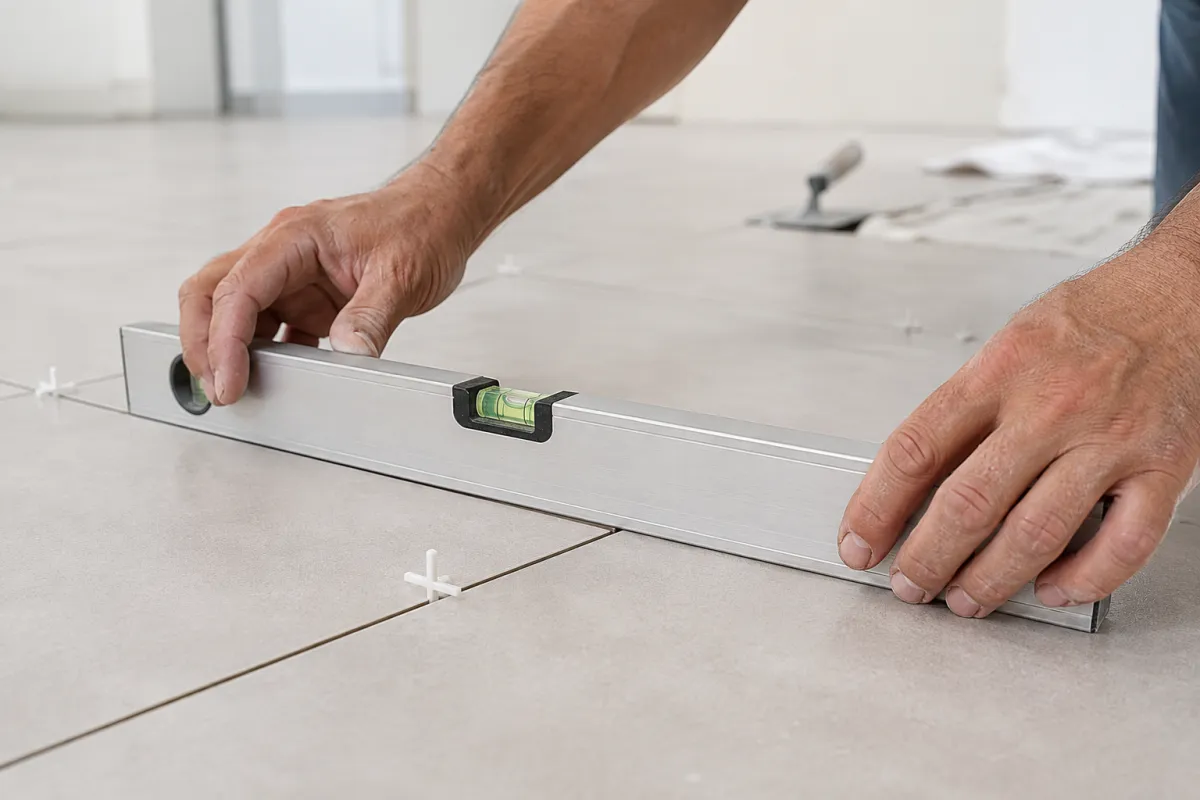
Tiling and flooring across Al Ain — new installation, replacement and repair. Proper substrate preparation and movement joints, so the floor stays down.
When a tiled floor lifts, the tiles are almost never the problem. It is the substrate, the adhesive, or the absence of a movement joint where one was needed.
We install, replace and repair tiling and flooring in villas, apartments and commercial premises across Al Ain.
Thermal movement. Everything expands and contracts. A tiled floor bonded rigidly to a slab across a large uninterrupted area, in a climate with wide daily temperature swings, builds compressive stress with nowhere to go. Eventually tiles debond and lift — sometimes dramatically, and usually along a line rather than in one spot. This is why movement joints exist, why they need to be at perimeters and at intervals across large areas, and why leaving them out is the most consequential shortcut in tiling.
External areas take the worst of it. A terrace or pool surround in direct Al Ain sun, reaching surface temperatures far above the already high air temperature and then cooling overnight, cycles harder than any internal floor. External tiling needs the right adhesive class, the right joint width and properly formed movement joints. It is not internal tiling done outdoors.
Hollow tiles mean poor adhesive coverage. Tap across a floor and you can hear it. Partial coverage — adhesive dabbed at the corners rather than fully bedded — leaves voids, and a void under a tile is where a crack starts the first time something heavy lands on it. Full bedding matters more on large-format tiles, which are increasingly what people choose.
Wet areas fail at the waterproofing, not the tiles. Tiles and grout are not a waterproof layer. The tanking underneath them is. If a shower has been leaking into the room below, replacing the tiles without addressing the waterproofing simply reinstates the problem behind a new finish.
Repair when the failure is localised, you have matching tiles or a close match is acceptable, and the surrounding floor sounds solid.
Replace when a large proportion sounds hollow, when the failure follows a line across the floor suggesting a movement problem, when the substrate itself has failed, or when a wet area needs the waterproofing done properly.
We tap-test before quoting. It takes ten minutes and it is the difference between a repair that holds and one that spreads.
When your existing floor is not worth tiling over. Tiling onto a failing floor transfers the problem upward.
When we cannot match your tile. Discontinued ranges are common. We will tell you before starting, not after lifting the broken one.
When the leak is not the tiling. Water appearing below a bathroom is often a pipe or a failed waste connection rather than the floor. We check before recommending you retile.
Civil maintenance · Plumbing · Painting and wall repair
Send photos and rough dimensions to 00971 56 391 3800 · Request a quote
Most often thermal movement with no movement joint to absorb it, or poor adhesive coverage leaving voids. Occasionally substrate failure. The pattern of the failure usually tells us which.
A void between tile and substrate — incomplete adhesive coverage. It does not always need immediate action, but it is where future cracks will start.
Sometimes, if the existing floor is fully sound, levels allow, and doors still clear. Often it is a false economy. We tap-test and advise honestly.
Yes. Tanking wet areas before tiling is standard on our work and is where most bathroom leak problems are actually prevented.
Typically the following day for foot traffic, longer before heavy furniture and before wet areas are used. We will give you the specific timing for the products used.
We can, or you can supply your own. If you supply them, order extra for cuts and future repairs — matching later is often impossible.
Survey first, written quote second, work third. Nothing starts until you agree the scope and the price.