AC Maintenance & Servicing
AC Maintenance & Servicing from Reef Al Ghadeer — covering Al Ain and the surrounding districts.

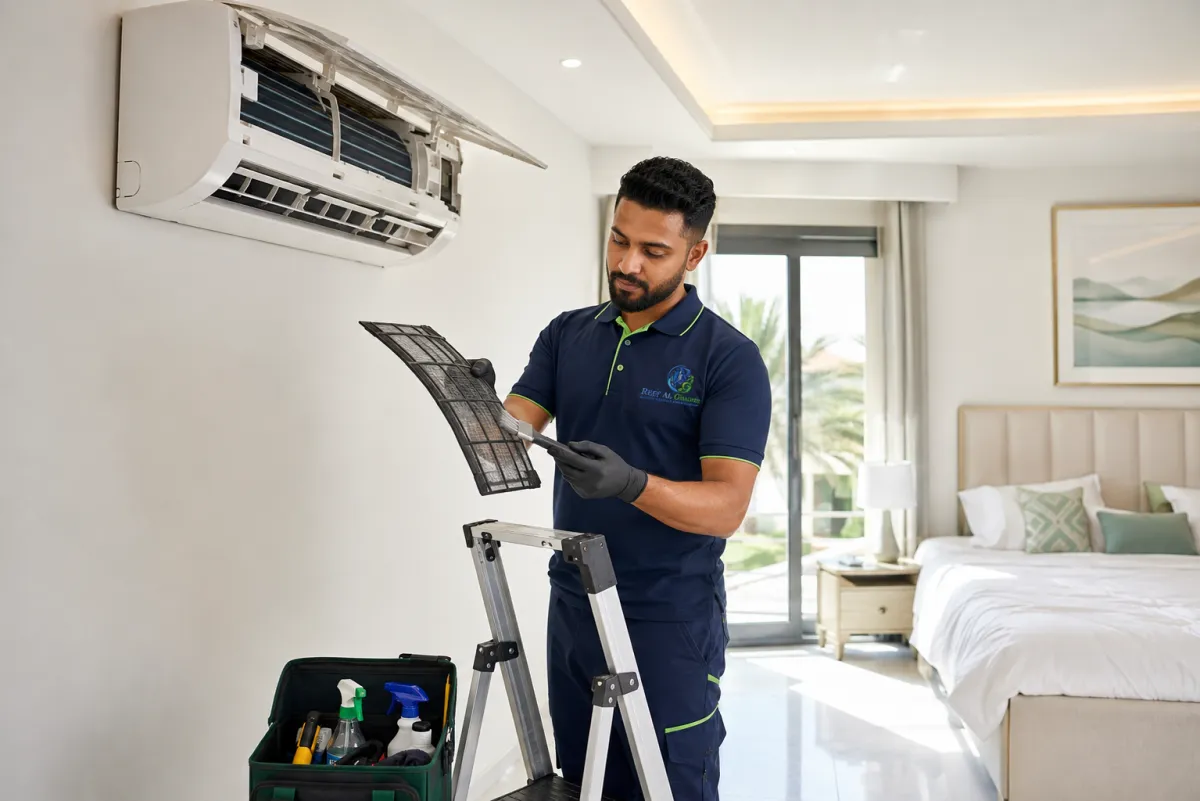
AC installation and replacement in Al Ain. Proper heat-load sizing for inland temperatures, correct pipework and drainage, commissioning records on handover.
Most air conditioning that underperforms in Al Ain was not badly maintained. It was badly specified on the day it was installed.
An undersized unit runs constantly and never quite gets there. An oversized unit short-cycles, wears its compressor out early and leaves the room clammy. A correctly sized unit fitted with the wrong pipework run, no fall on the drain, or a condenser tucked into an unventilated corner will fail early regardless of how good the equipment was.
We install and replace split units, ducted split systems and package units across Al Ain, for villas, apartments, offices, retail units and industrial premises.
This is where most of the value sits, and it is the step that gets skipped.
Capacity is not chosen from a table of room sizes. It is calculated from the heat load — floor area, ceiling height, glazing area and orientation, insulation, occupancy, equipment in the room, and the design outdoor temperature the system has to work against.
That last variable is where Al Ain differs from the rest of the UAE. Inland runs materially hotter than the coast: the National Center of Meteorology forecasts inland highs of 38 to 44°C against 35 to 41°C coastal, and Al Ain has recorded 48°C on a day when coastal areas peaked at around 41°C.
Air conditioning capacity is rated at a stated ambient, and real output falls as outdoor temperature rises. A unit specified against a coastal design temperature will deliver less than its nameplate figure on an Al Ain August afternoon — exactly when you need all of it. Sizing to a Dubai assumption is the single most common reason a new system disappoints in its first summer.
We survey the space and calculate the load. It takes longer than reading a chart and it is the difference between a system that works in August and one that does not.
| Type | Suits | Watch out for |
|---|---|---|
| Wall split | Single rooms, apartments, retrofits, additions | Pipe run length and outdoor unit position both affect performance |
| Ducted split | Villas and whole-floor cooling. The Al Ain default | Duct design and ceiling void depth matter as much as the unit itself |
| Cassette | Offices, retail, large open spaces with suspended ceilings | Needs adequate void depth and drainage fall |
| Package unit | Warehouses, standalone commercial, industrial | Structural support and access for future maintenance |
| Floor standing | Reception areas, majlis, spaces with no ceiling void | Floor space and airflow obstruction |
Point 6 is worth dwelling on. Pressure testing and evacuating a system properly takes time, and it is the easiest corner to cut because nothing visible goes wrong on the day. If you are comparing quotes and one is significantly cheaper, ask what the vacuum procedure is. The answer tells you a lot.
Replacing is not simply swapping units. Worth checking before you commit:
If you are weighing replacement against another repair, our AC repair page sets out where that line usually falls, and we will quote both so you can compare.
We also relocate existing units during renovations, add units to extensions and majlis additions, and reposition badly sited outdoor units. Relocation involves recovering refrigerant properly, re-running pipework and drainage, and recommissioning — it is a full installation job, not a lift and shift, and anyone quoting it as an hour's work is not recovering the gas.
Where AC installation forms part of a wider renovation, we handle the electrical, civil and finishing work too — see villa maintenance and electrical maintenance.
A new system still needs servicing, and warranty terms usually depend on it. We book the first service at handover so it does not get forgotten. See AC maintenance and servicing and annual maintenance contracts.
Call or WhatsApp: 00971 56 391 3800
Email: [email protected]
Book a site survey
It cannot be answered accurately from floor area alone. Glazing, orientation, ceiling height, insulation, occupancy and the design outdoor temperature all feed into it — and in Al Ain that last factor pushes the requirement above what a coastal rule of thumb would suggest. We survey and calculate rather than guess.
A straightforward wall split replacement is usually half a day. A ducted split in a villa, with new pipework and ductwork, typically runs to two or three days depending on access and the number of zones.
Sometimes. It depends on the age, the refrigerant the old system used, the pipe sizing against the new unit, and the condition of the duct. We inspect before advising, and we will tell you honestly when reuse is a false economy.
Generally yes, and more so here than on the coast. Al Ain systems run long hours against high ambient temperatures for several months a year, which is exactly the duty cycle where inverter efficiency gains accumulate on the ADDC bill. The payback is faster the harder the system works.
Yes, including proper recovery of refrigerant. Venting refrigerant to atmosphere is not acceptable practice and we do not do it.
Survey first, written quote second, work third. Nothing starts until you agree the scope and the price.